SHIPWRECKS

OF MASSACHUSETTS BAY

© Copyright 2003-2008, Northern Atlantic Dive Expeditions, Inc.

All Rights Reserved


NEW YORK CENTRAL NO. 14 II


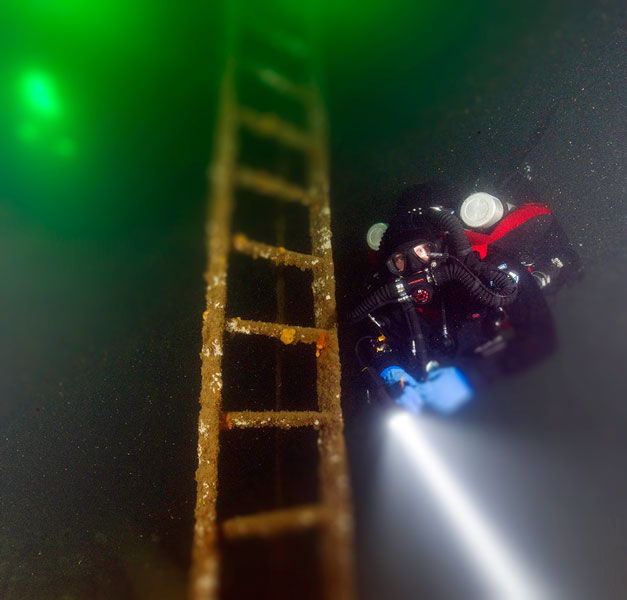
NYC 14-II.  Photo courtesy of Eric Takakjian.


Type: Steam lighter

LOA: 113.9' x 31' x >12'

Construction: Steel

Date of Loss: Unknown

Reason: Scuttled

Depth of Water: 120 fsw 

History:  

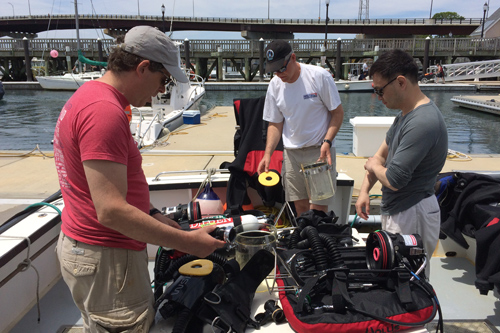
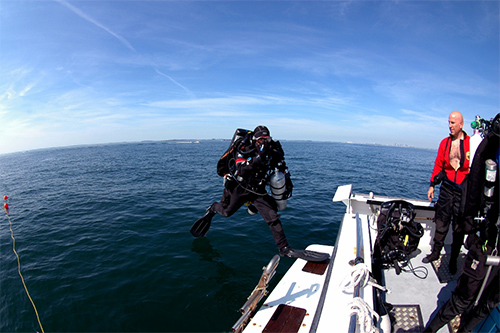
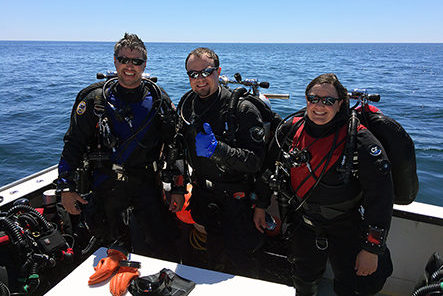
The wreck known for many years among local divers as the “Pug wreck” has been identified as that of the covered steam lighter “New York Central No. 14 (ii).”  The identification of the wreck was made by Eric Takakjian after conducting a series of dives on the site over the 2006-2007 seasons and performing thorough and detailed archival research.  Takakjian directed a team of divers from the crews of both the QUEST and GAUNTLET, who worked together in collecting data and measurements, as well as photographs and video footage.


The following is a summary of an article authored by Eric Takakjian and published in the Winter 2007 issue (No. 264) of the Steamboat Bill, the Journal of the Steamship Historical Society of America.1


The New York Central No. 14 (ii) (NYC 14 II) was built at the Staten Island Shipbuilding Corporation on Staten Island, New York, in 1916.  The NYC 14 II was constructed for use as a steam lighter for the New York Central Railroad.  This was in fact the only vessel built by the Staten Island Shipbuilding Corporation for the New York Central Railroad, which later became Bethlehem Steel.  Though the NYC 14 II was constructed as a replacement for the NYC 14, there were no sister ships to the NYC 14 II, which made this vessel truly unique and all the more challenging to identify since no other documented vessels that could serve as comparators existed.


In summary, key information was gathered that lead to successful identification of the NYC 14 II:

After its long service as a steam lighter, review of certificates of enrollment the revealed the NYC 14 II was sold in February 1962 to Capt. E.S. Wilcox of New London, CT.  One month later, the vessel’s enrollment was surrendered and the NYC 14 II was lost to further documentation.  First-hand accounts indicate the NYC 14 II was used as a storage facility and eventually became a floating office for the Ross Towboat Company in the 1960s after their office was destroyed when the Boston T Wharf collapsed.  In 1979, Ross Towboat was purchased by Boston Fuel Towing Company.  There is no record of the NYC 14 II being part of Boston Fuel’s vessel fleet and thus it is believed that the NYC 14 II was scuttled sometime before the sale of the Ross Towboat.  This establishes a fairly wide window, placing the sinking sometime between the mid-1960s and 1979.  Research efforts to uncover further details pertaining to the sinking are ongoing.


The NYC 14 II was originally located in 2002 by Bob Foster and presently rests in 120 feet of water in Massachusetts Bay.  The main deck can be reached in approximately 105 feet of water.  All of the upper structures, such as a deckhouse or pilot house, are gone.  Some smaller structures such as kevel cleats and stem bitts remain.  Sections of the deck are peeled back along the edges in some areas.  The hatches that access the interior of the wreck are intact and open.  The engine and surrounding machinery are present and exposed.  Two large water tanks forward of the boiler can be found inside the wreck.  Inside the wreck, areas of living quarters and work spaces can be seen.  The seafloor in the area is a mud/clay composition and visibility at this site tends to be lower than average at about 10-15 feet.  Certain times of the year the visibility can be much better, but it is generally highly unpredictable.  Currents at the site are light and the wreck is easily navigable given its small size and the intact nature of the hull itself.  The hull is also covered in anemones and a multitude of marine life typical of the area.  This wreck also makes a good site for advanced recreational or entry-level technical diving training, as it is relatively free of hazards, provides for a platform by way of the open deck and rests at a depth convenient for introducing students to real gas management and decompression planning concepts.


1References:


Takakjian, Eric. “New York Central No. 14 (ii) – The Final Chapter”

2007: Steamboat Bill, (264); 33-38.


The full article can be obtained through the Steamship Historical Society of America. http://sshsa.org


 Photos:


NYC 14-II as a waterboat.  Photo courtesy of Eric Takakjian.


A large rudder partially buried in the sand (left) and a kevel cleat along the edge of the wreck (right).


The steam engine - a single-cylinder direct-acting steam engine.  The fact that this engine was not removed prior to sinking further supports the timeframe in which we believe the sinking to have occurred.  Depression-era vessels that were disposed were typically stripped of machinery as such things were valuable commodities during hard economic times.


Back to Mass Bay Shipwrecks    Back to Main Page     Shipwreck Junction